
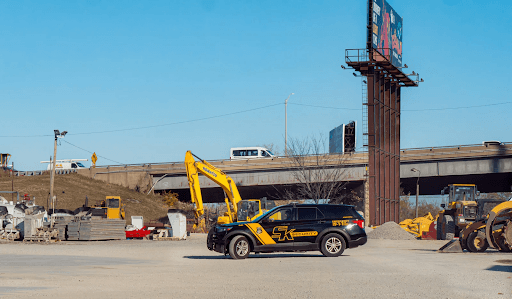
Managing security across multiple construction sites requires a clear plan for each location. Different project phases, working hours, access points, and material-storage areas can create different coverage needs, even when one security provider oversees the entire portfolio.
A proposal that does not specify staffing, patrol schedules, or procedures for uncovered shifts leaves important questions unanswered. Before choosing a provider, you need to understand what each site requires and how the proposed services will address those needs.
This guide covers how to secure a construction site across multiple locations by helping you:
- Assess each site’s specific security and coverage requirements.
- Verify applicable security licenses and guard credentials.
- Compare proposed security services based on each site’s needs.
- Identify what to include in a written proposal, including coverage hours, responsibilities, and service limitations.
- Evaluate security providers and choose a partner that fits your construction portfolio.
What You Need Before You Start
Build a separate requirements record for each location so providers can respond to actual conditions rather than a general description.
Gather Each Construction Site’s Coverage Requirements
Prepare the following information before requesting proposals:
- Site address and jurisdiction.
- Construction phase and expected completion schedule.
- Working hours and requested after-hours coverage.
- Entrances, delivery points, and material-storage areas.
- Existing security arrangements.
- Site contact and proposal priorities.
Flag upcoming changes, including new delivery routes or extended working hours. A provider cannot address a requirement you have not explained. A consultation can clarify requirements before you specify officer numbers or patrol visits.
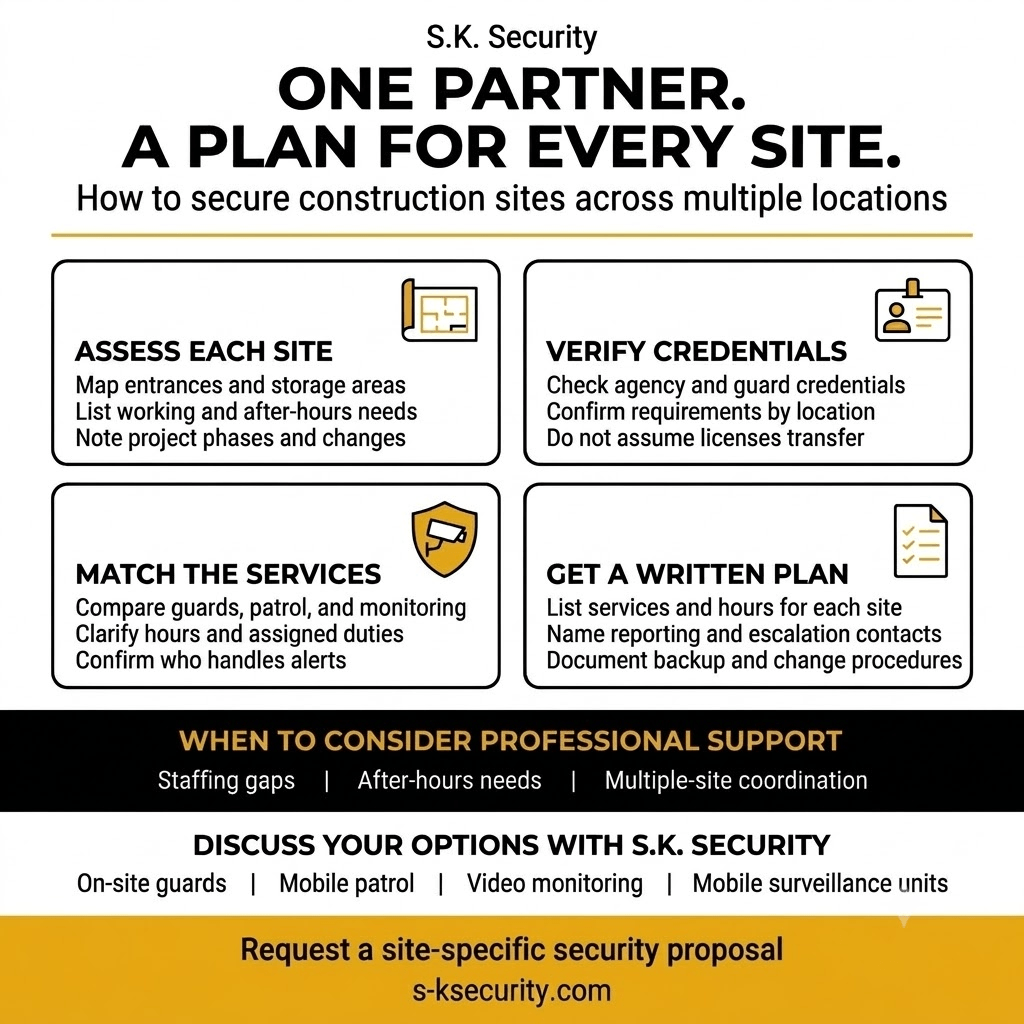
Step-by-Step: How to Secure a Construction Site Across Multiple Locations
Evaluate a security partner in four steps:
- Assess each site
- Verify applicable credentials
- Match services to requirements
- Compare written coverage details
Keep jurisdiction-specific checks separate, and ask the provider to explain the proposed coverage, responsibilities, and exclusions for every location.
Step 1: Assess Each Site Separately
Identify the concerns you want the provider to address at each location. Separate working-hour requirements from the periods when contractors leave the property, and identify the areas that need attention during each phase of construction.
According to TrueLook and Noonlight’s 2026 State of Construction Site Security report announcement, monitoring data from thousands of active U.S. construction sites recorded 2,639 confirmed break-ins during 2025. This figure describes the monitored sites included in the report, not a nationwide incident total.
Use the finding as context when reviewing your site’s exposure, rather than assuming every project faces the same level of risk.
For example, an entrance used for frequent deliveries may require different oversight from a storage area that remains unattended overnight. Ask the provider how its proposed coverage addresses these conditions and why it recommends particular hours or duties.
Do not assume every project needs the same staffing level or patrol schedule. The proposal should explain how the provider arrived at its recommendations for each location.
Step 2: Verify the Credentials Applicable to Each Location
Ask which legal entity will provide the services and which agency licenses and individual guard registrations apply. Record the verification method for every jurisdiction instead of relying on a general statement that a provider operates in multiple states.
The Arizona Department of Public Safety licensing portal explains that security guard registrations are not transferable between states or individuals.
Before hiring a provider for an Arizona construction project, verify the applicable agency license and guard registration requirements through the department’s official resources.
For Nevada, use the Nevada Private Investigators Licensing Board’s public access portal to locate relevant licensing records. Confirm the applicable requirements with the responsible authority in each other state as well.
If your project requires armed guards, verify the credentials and authorizations applicable to armed duties. Do not assume that a credential issued in one jurisdiction automatically authorizes every proposed assignment elsewhere.
Step 3: Match Professional Services to Each Site’s Requirements
Ask the provider to explain the purpose of every proposed service. An on-site officer, scheduled mobile patrol, and video monitoring represent different coverage arrangements.
Clarify whether the proposal includes continuous physical presence, periodic visits, live video oversight, or a combination. For mobile surveillance units, ask who monitors activity and what happens after an alert.
Do not choose a service simply because another project uses it. Compare its proposed duties and operating hours with the requirements you documented for that location.
Step 4: Compare Written Coverage Details Site by Site
Request a consistent proposal format that makes differences visible. Include these fields for every site:
- Site address and jurisdiction.
- Service hours and proposed service mix.
- Applicable agency and guard credentials.
- Named escalation contact.
- Arrangements for missed coverage.
- Sample reporting and agreed review frequency.
- Approval process for coverage changes.
Ask what happens if a shift goes uncovered, who receives the notification, and which proposed backup arrangements apply. These are questions to resolve before hiring, not capabilities to assume.
Review exclusions alongside included services. If a proposal lists “overnight coverage,” clarify whether that means an officer remains on site or a patrol visits periodically. Record the agreed answer before comparing price.
When This Becomes a Job for a Professional
Consider professional support when your team cannot consistently provide the coverage, supervision, or coordination your project locations require.
Recognize Gaps in Staffing and Site Oversight
Look beyond whether an employee can occasionally check the property. Ask who takes responsibility when the usual contact is unavailable, two sites need attention simultaneously, or work continues outside normal hours.
The TrueLook and Noonlight 2026 report announcement reports that more than 40% of the break-ins recorded in its monitored-site dataset occurred on weekends. This finding describes the report’s sample, not every construction site’s risk or the likelihood of an incident at a particular project.
Professional coverage deserves consideration when your team lacks a clear plan for unattended hours, access oversight, or incident escalation. Outsourcing does not remove the need for internal supervision. You still need an accountable contact and agreed expectations for every location.
Define Responsibilities Before Coverage Begins
Confirm who schedules personnel, receives reports, escalates incidents, and authorizes changes. Identify the decisions your site managers retain and the duties the provider accepts.
Discuss temporary changes, including weekend deliveries and altered access points. Ask how the provider documents instructions and confirms receipt. Written responsibilities clarify expectations. They do not guarantee incident prevention or eliminate your organization’s responsibilities.
How S.K. Security Approaches Construction Site Security
Evaluate S.K. Security against your locations and requirements to establish whether its proposed services fit your projects.
Discuss Services for Your Named Project Locations
Discuss construction site security, mobile patrol, video monitoring, and mobile surveillance units as potential components of your proposal.
S.K. Security’s service markets include Kansas City, Las Vegas, and Phoenix.
Confirm the requested service mix, hours, and geographic availability rather than assuming identical deployment arrangements everywhere.
Review S.K. Security’s Award Recognition
S.K. Security received the Kansas City Award in the Security Service category in 2022 and 2023. When evaluating a proposal, confirm staffing, response times, and coverage arrangements for your specific project.
Frequently Asked Questions
Resolve these practical questions before selecting coverage for multiple locations.
Q1. How Do I Secure a Construction Site Across Multiple Locations?
Use four steps: assess each site, verify applicable credentials, compare services, and request written coverage details. Keep separate requirements for every address. This helps you evaluate one provider without overlooking differences in working hours, entrances, construction phases, or assigned responsibilities.
Q2. Can One Security Company Cover Construction Sites in Different States?
Yes, where it has the applicable authorization and available resources. Verify each proposed location separately. Arizona, for example, requires guards to meet its registration requirements rather than transfer another state’s registration. Confirm the relevant requirements before agreeing to coverage elsewhere.
Q3. What Should a Multi-Site Construction Security Proposal Include?
Include hours, services, credentials, contacts, reporting, and exclusions. Document arrangements for missed shifts and approved changes.
Q4. Should Every Construction Site Use the Same Security Services?
No. Match services to each location’s hours, layout, phase, and duties instead of assuming one package fits.
Q5. Does S.K. Security Offer 24/7 Construction Site Security?
Yes, according to its service information. Confirm your locations, hours, start date, and proposed scope before booking.
Request a Site-Specific Construction Security Proposal
Securing multiple construction sites starts with a clear understanding of each location’s coverage requirements, staffing needs, and access points. Compare security providers based on their proposed services, verified credentials, reporting procedures, and written commitments.
Before signing, ensure every site has defined responsibilities and a clear process for handling uncovered shifts or changes in coverage.
Ready to strengthen security across your construction sites? Contact S.K. Security to discuss your project locations, review your coverage requirements, and request a tailored construction site security proposal.