
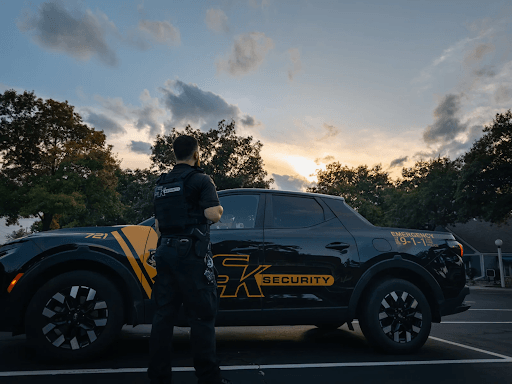
Construction sites can remain exposed to unauthorized access, missing equipment, and property damage after crews leave for the day. A security contract that lists patrol visits without defining the officer’s duties can leave project managers unsure about what the service actually covers.
Understanding what a mobile security patrol officer does helps construction managers evaluate providers, compare proposals, and set clear expectations before work begins. The right arrangement should specify which areas officers check, how they report unusual activity, and whom they contact when a problem arises.
In this article, you will learn how to evaluate construction site mobile patrol services, including:
- Patrol duties: What officers typically check during after-hours visits.
- Written plans: Which duties, reporting requirements, and escalation procedures to include in the agreement.
- Provider evaluation: What to ask before choosing a security service.
Actual duties depend on the property, contract, officer qualifications, and safe access conditions. These examples are planning considerations, not a universal checklist.
What Does a Mobile Security Patrol Officer Do at a Construction Site?
A mobile security patrol officer visits designated areas to check for signs of unauthorized access, property damage, and other security concerns. Depending on the contract, the officer may inspect accessible gates and entrances, observe the perimeter, check specified storage areas, and document unusual conditions.
O*NET OnLine’s Security Guards occupation profile identifies patrolling commercial premises, checking doors and gates, responding to disturbances, and writing reports among the occupation’s tasks. The precise responsibilities of a mobile patrol officer depend on the assigned property and agreed service scope.
For a construction project, the written duty list should identify the locations to inspect, the expected visit schedule, and the reporting process. It should also explain which areas are excluded and what the officer should do when access is restricted or conditions make an inspection unsafe.
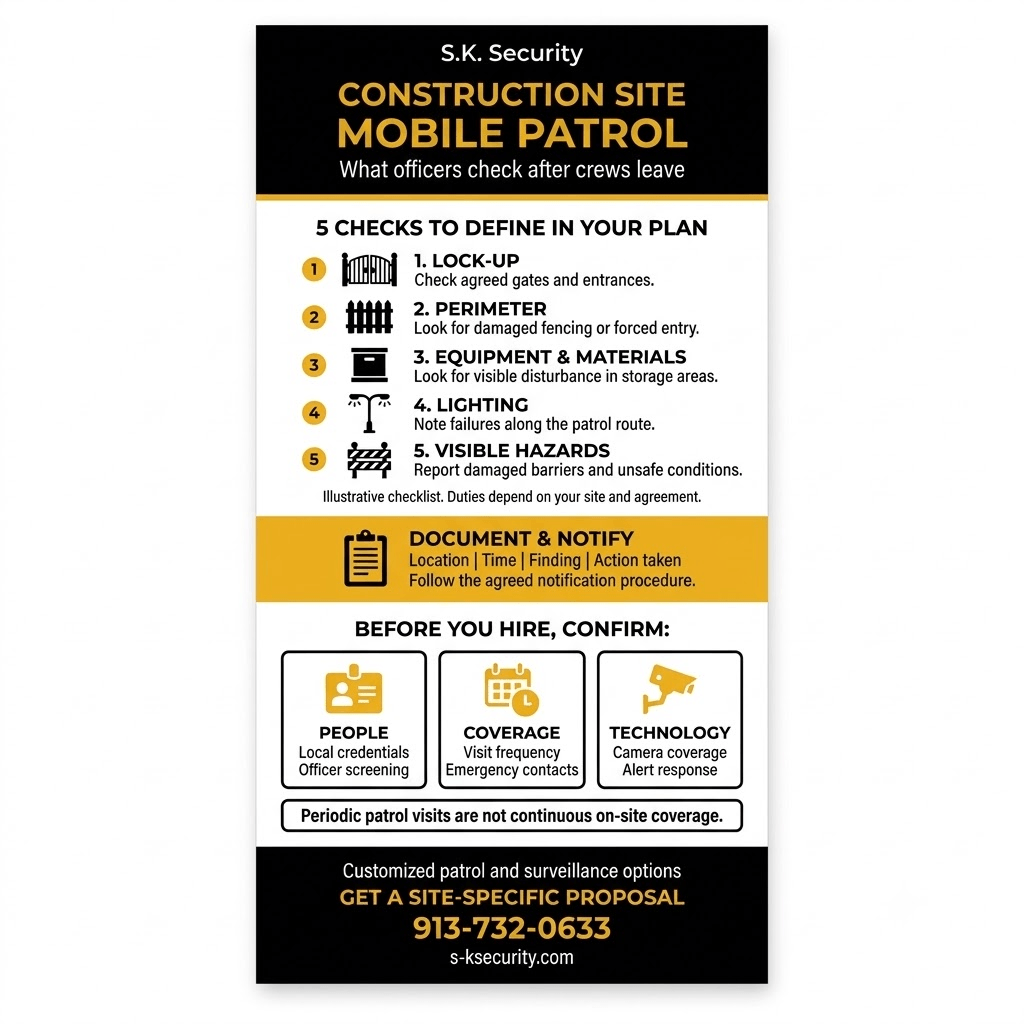
The After-Hours Patrol Round, Step by Step
Use the following sequence as a starting point when discussing a patrol plan with a provider. It is an illustrative example, not a mandatory industry standard.
1. Check Agreed Entrances and Gates
The officer checks designated entrances for visible signs of forced entry, damage, or other unusual conditions. Where the contract includes these checks, the officer may also confirm that accessible gates and doors appear secured.
The agreement should specify which entrances are included and how the officer should report a door or gate that cannot be secured. Repairs and changes to site access arrangements remain the responsibility of the designated construction or property personnel.
2. Observe the Perimeter
The officer follows the agreed route and looks for visible damage to fencing, unusual activity, or other signs that someone may have entered without authorization. The route should account for the site’s layout and any areas that officers cannot safely access.
A perimeter check is not a guarantee that every part of a large site has been continuously observed. Ask the provider to explain which sections each visit covers and how incomplete checks are documented.
3. Check Designated Storage Areas
Construction projects may store tools, materials, and equipment in specific areas after work ends. If the patrol agreement includes these locations, officers can look for visible disturbance, damage, or signs of unauthorized access.
The duty list should identify the areas officers are expected to observe. It should not imply that officers will count inventory, conduct technical equipment inspections, or verify the condition of every stored item unless those tasks are explicitly included and appropriate for the assignment.
4. Note Lighting or Access Concerns
Failed exterior lighting, damaged barriers, and obstructed access points may warrant attention. Officers should record observations within the agreed scope and notify the designated contact when a condition requires follow-up.
Security patrols do not replace construction safety inspections or the responsibilities of qualified site personnel. OSHA provides separate construction standards and compliance guidance for workplace hazards, safety programs, and employer responsibilities.
5. Document Findings and Escalate Incidents
A patrol report should record the visit, areas checked, relevant observations, and actions taken. If an officer finds signs of forced entry, an unsecured access point, or another concern, the response should follow the agreed escalation procedure.
The plan should identify who receives routine reports, who handles urgent notifications, and when emergency services should be contacted. These details make the service easier to evaluate than a visit count alone.
What Buyers Often Miss When Comparing Mobile Patrol Services
A proposal may list the number of visits without explaining what happens during each one. Before comparing providers, ask for a written description of the duties included in each round.
- Clarify visit frequency. Confirm the planned schedule, approximate visit windows where applicable, and whether the provider can accommodate changing site hours. Do not assume that a set number of visits guarantees uninterrupted observation.
- Request a sample report. Review how the officer records completed checks, unusual findings, restricted access, and notifications. Confirm whether reports are delivered through email, an online system, or another agreed method.
- Define exceptions. Establish what happens when a gate is locked, an area is unsafe, a route is blocked, or an officer observes an urgent concern. The reporting process should distinguish a completed check from one that could not be performed.
- Separate patrol from continuous guarding. Mobile patrol provides periodic visits. An on-site guard may be more suitable when a project requires continuous access control or an uninterrupted security presence. The proposal should explain the difference and recommend coverage based on the site’s needs.
What to Look for in a Construction Site Mobile Patrol Provider
Evaluate personnel, coverage arrangements, and supporting technology together. Each should address a specific requirement on your site.
Criterion 1: Licensing and Screening
Ask which credentials apply where your project operates. Do not assume a license or officer classification from one jurisdiction automatically covers another.
S.K. Security identifies Level III commissioned officers and screening that includes drug testing, background checks, and psychological evaluation. Confirm the credentials relevant to your project during proposal review.
Also discuss authorized duties. Your agreement should distinguish security observations and notifications from construction inspections, repairs, and contractor responsibilities.
Criterion 2: 24/7 Availability
S.K. Security offers 24/7 availability. Availability does not mean a mobile officer remains on your property continuously.
Ask which overnight hours your agreement covers, how visits work, and who receives urgent notifications. Establish a backup contact if the primary site manager does not answer. For weekend shutdowns or changing schedules, discuss adjustments before the coverage period begins.
Criterion 3: Technology Alongside Patrol
S.K. Security offers mobile surveillance units and video monitoring alongside officer services.
Ask how cameras and patrol visits would work together. Confirm who monitors footage, which areas receive coverage, and how alerts reach the appropriate contact.
Camera availability alone does not establish those arrangements. Include the agreed monitoring hours and notification responsibilities in the proposal.
How S.K. Security Can Help Plan Construction Site Coverage
S.K. Security offers construction security, mobile patrol, and surveillance options tailored to site requirements. When requesting a proposal, share your site plan, access points, unoccupied hours, and security priorities.
Ask for written details on patrol duties, visit frequency, reporting procedures, and service exclusions. If you need continuous on-site coverage, clarify that requirement before finalizing the agreement.
S.K. Security’s Process
The company’s construction site security services provide a starting point for discussing your project. Its service range includes officer coverage, mobile patrol, and surveillance options.
Bring a current site plan. Identify entrances, storage areas, restricted zones, and hours when workers remain on-site. Explain which areas officers can safely access and who can authorize entry.
As construction progresses, review the scope. A relocated gate or newly occupied building can change the locations you want officers to check. Do not assume the original duty list automatically includes later additions.
Proof Point
Ask S.K. Security to identify the personnel qualifications and service arrangements that apply to your project. Review those details alongside the proposed duty list, coverage hours, and communication process.
A useful proposal connects each promised service to a clear responsibility. Confirm who conducts inspections, who receives reports, and who can approve changes. Those details give your team a practical way to evaluate the agreement throughout construction.
Frequently Asked Questions
Resolve these questions before signing a patrol agreement.
Q1.How many patrol visits does a construction site need overnight?
No single visit count fits every property. Discuss site size, access points, equipment, and unstaffed hours. Require the proposal to explain the selected frequency and included checks, rather than treating visit count as a complete description of the protection you need.
Q2. Does my construction site need mobile patrol or an on-site guard?
Mobile patrol provides periodic visits rather than continuous presence. Consider an on-site guard for ongoing access control or uninterrupted observation. S.K. Security offers both services; the proposal should connect its recommendation to your site’s needs and explain coverage between patrol visits.
Q3. Can mobile patrol work with video monitoring on a construction site?
S.K. Security offers video monitoring and surveillance units. Confirm monitoring hours and alert-response arrangements.
Q4. How much does construction site mobile patrol cost?
Request a site-specific proposal. Ask how coverage hours, frequency, and inspection scope affect pricing.
Q5. Does S.K. Security provide construction site mobile patrol outside Kansas City?
S.K. Security operates across multiple states. Confirm availability for your project’s address before arranging coverage.
Secure Your Construction Site with a Clear Patrol Plan
Choosing the right construction site mobile patrol service starts with defining your security priorities, patrol duties, and reporting expectations. A clear agreement helps you understand what each visit covers and whether your project needs additional on-site security.